

Have you ever wondered how to make music theory more engaging for your students?
During a recent trip to Madison, Wisconsin for the Wisconsin State Music Conference, I had an eye-opening conversation with Guy Gregg, an amazing band director from Oak Creek High School in suburban Milwaukee, who introduced me to something I’d never heard of before: Bandle.
This app has completely transformed how he approaches teaching music concepts in his classroom, and after our dinner conversation where we shared stories about music technology, I knew this was something worth writing about. Guy explained during our meeting how he uses Bandle with his high school students, particularly when working through complex music theory lessons that traditionally feel dry or intimidating.
🔗 Play: Spotle Music Wordle Game
What struck me most was his enthusiasm when he described the app’s approach to making music education interactive and fun, turning what could be tedious ear training into an engaging challenge that students actually look forward to.
Afterwards, following the session he helped present on behalf of MusicFirst, I realized this app represents exactly the kind of innovative teaching tool that bridges the gap between traditional band instruction and modern music technology.
The pleasure of connecting with passionate educators like Guy at events throughout the week reminds me why sharing these discoveries through a blog post matters so much, especially when something as simple as an app can revolutionize how we approach music education for our customers and fellow teachers nationwide.
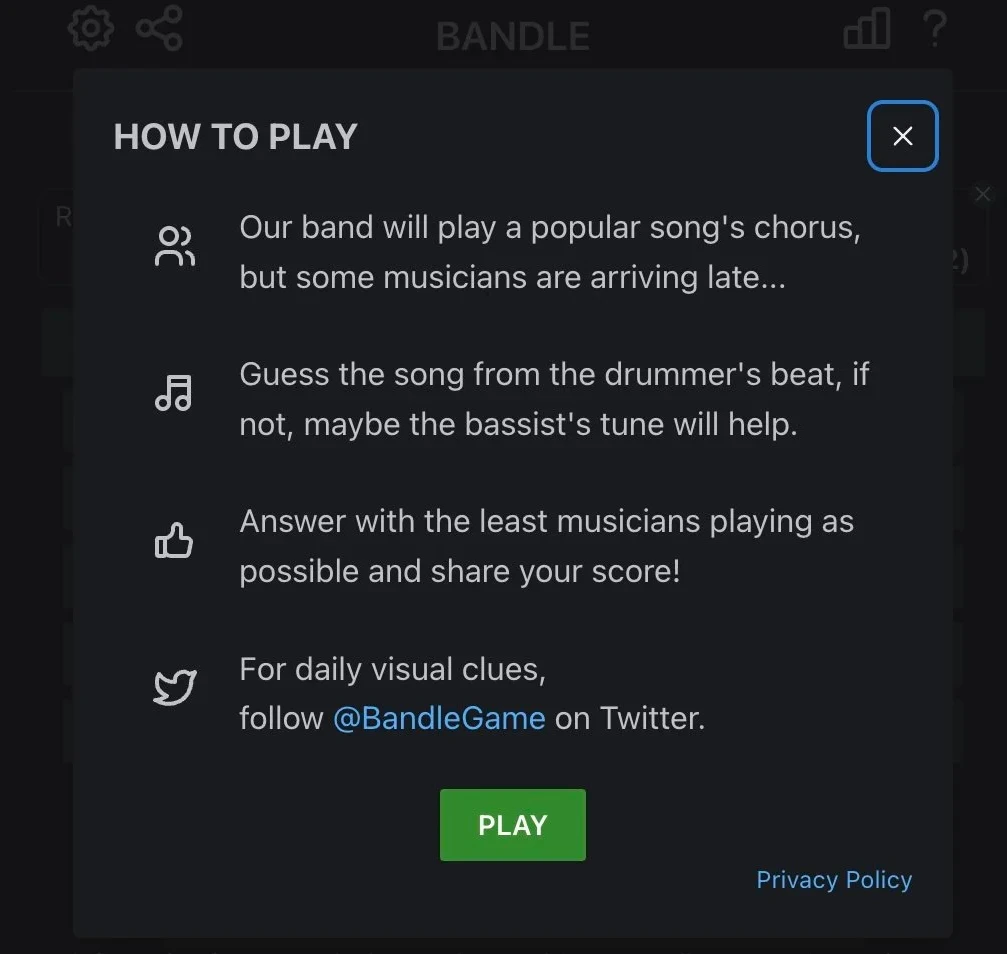
How Bandle Transforms Song Recognition Into a Layered Challenge
Essentially, Bandle takes the brilliantly simple concept of the popular word game Wordle and creates a clever riff on it for music lovers, but instead of letters, you’re playing detective with sounds to guess a song within 6 tries or less.
What makes this game so engaging is its unique approach: rather than hearing the full tune in short snippets like most music quiz apps, Bandle plays 1 isolated instrument track at a time, forcing you to really listen and think critically about each layer.
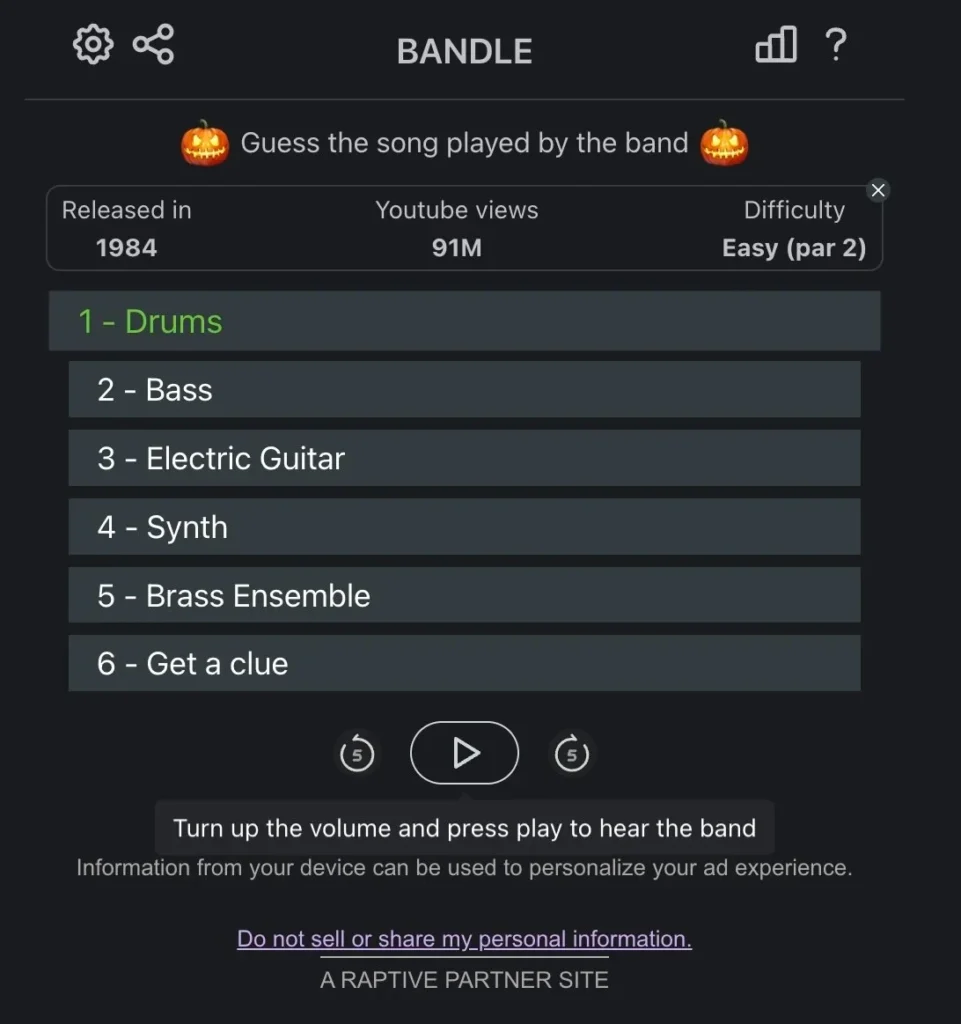
- You start with just the drum track for your first guess, which can be surprisingly challenging since drums alone don’t always give away a song’s identity, and if you can’t figure it out from that isolated percussion, you then add one instrumental track on top of the drum foundation with each subsequent guess.
- I absolutely LOVE how this layered approach teaches ear training without feeling like a lesson because each time you play, you are essentially deconstructing how a song is built, recognizing how individual instrument parts contribute to the whole tune, and developing a deeper appreciation for production choices.
- In case you are wondering whether this playing experience actually improves musical understanding, I have found that students who regularly engage with Bandle become noticeably better at identifying instruments in complex arrangements and understanding how different tracks work together to create the full sonic picture, making every guess a valuable learning opportunity rather than just another game.
Personal Insights and Helpful Clues That Make Bandle Accessible
Speaking from me as a tuba player, I can tell you that the moment I add the bass track to the mix, it becomes pretty clear what the name of the song actually is, which shows how different instruments resonate with different player backgrounds and expertise.
What clues does the game provide to help you succeed once you’re stuck? They offer some pretty basic hints that make the experience accessible even when your ears are not immediately picking up the song, including revealing the year that the track was released, which instantly narrows down the possibilities and gives context to the musical style you are hearing.
Have you noticed how today’s game often follows a specific theme?
For instance, during Halloween season, the song selections align with that theme, adding an extra layer of cultural relevance and making it easier to guess if you think about what music typically gets played during that time of year.
🔗 Read: Spotle Unlimited | Spotify Wordle Game
I find this thematic approach particularly clever because it becomes not just about recognizing a song by its bass track or other instrumental layers, but also about understanding how music connects to moments, holidays, and cultural touchstones, which makes me appreciate how Bandle teaches contextual listening skills that go beyond basic note recognition and actually help any player develop a more holistic understanding of how music functions in our lives.
The Smart Interface and Instant Gratification of Bandle’s Gameplay
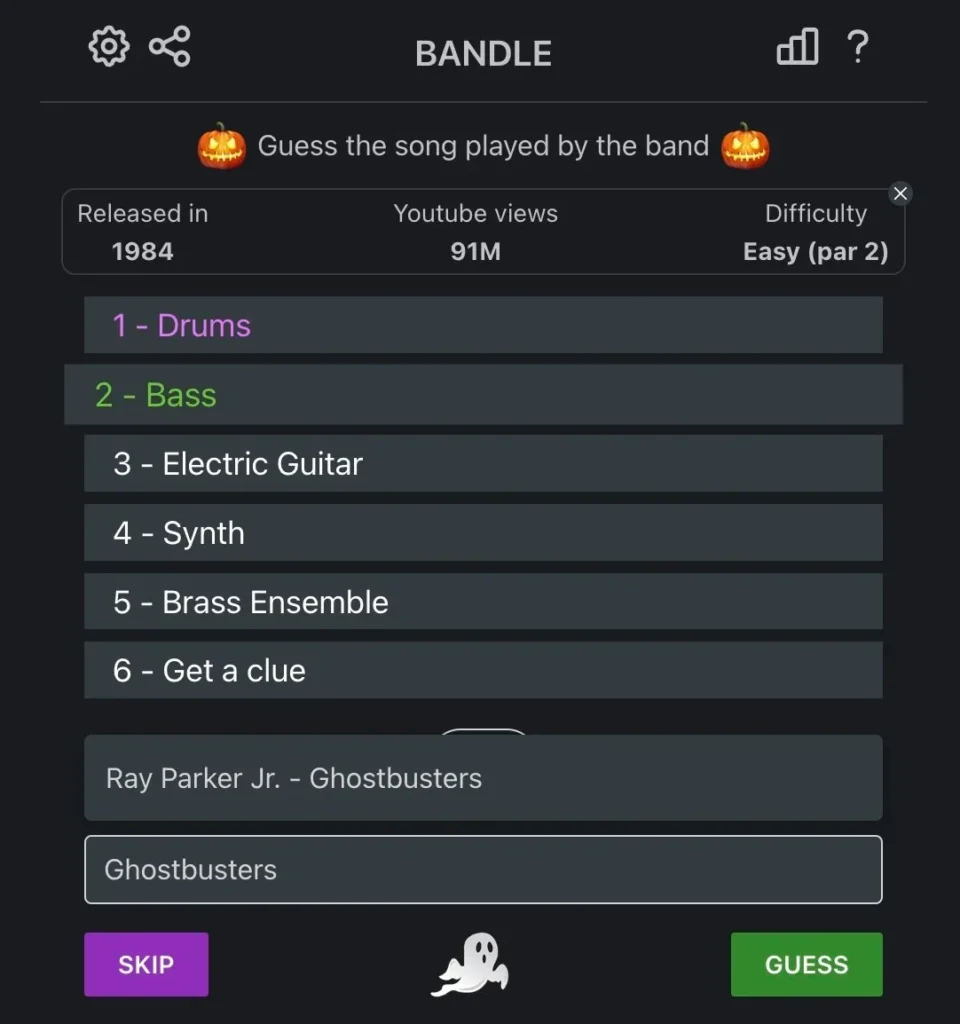
When you start to type your guess into the app, something wonderfully helpful happens: it will automatically populate the full name of the song and artist, which eliminates frustrating spelling errors and helps you quickly confirm whether what you’re thinking matches an actual track in their database.
If you think your guess is correct, simply click the Guess button to submit it, but if you need more clues to figure out the puzzle, you can click Skip to add another instrumental layer instead of wasting a wrong attempt.
What makes today’s challenge particularly memorable? The puzzle featured the iconic bass line from Ghostbusters by Ray Parker Jr., which was surprisingly easy to identify because that funky, unmistakable groove is so deeply embedded in pop culture that even non musicians recognize it instantly.
🔗 Read: Spotle Answers Today – Daily Hints & Solutions
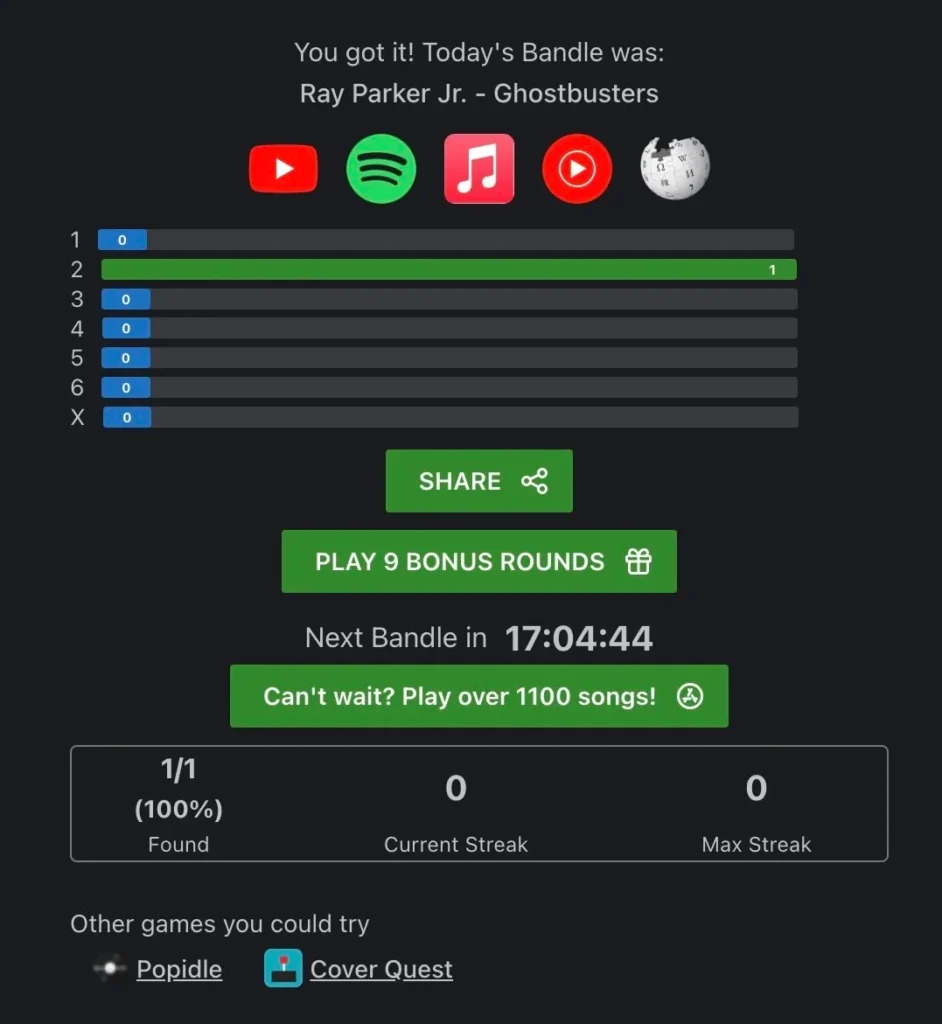
If your guess proves correct, you get a satisfying congratulations message along with links to the actual song across a variety of streaming platforms, allowing you to immediately listen to the full track and verify your musical instincts were spot on.
I have found this instant reward system particularly effective in educational settings because students get immediate feedback and can explore the complete song arrangement, comparing what they heard in isolated tracks to how the artist intended everything to sound together, which transforms each correct guess into a mini music appreciation lesson that connects your ears to real platforms where music lives and breathes beyond the puzzle format.
Classroom Applications and Daily Musical Discovery
Guy told me something fascinating about how he uses Bandle pretty frequently with his music theory students: they love it so much that once they guess the song, they don’t just move on but go deeper into the actual track to analyze each instrumental part, focusing on various music theory concepts that composers employed throughout the song.
Why does this work so brilliantly in the classroom? Bandle plays sound-alike tracks rather than the actual ones, which allows the app to isolate and play the individual stems without copyright restrictions, turning each puzzle into a meaningful learning opportunity where students can examine how various instrumental layers contribute to the whole musical idea.
I’m certain that your students will respond enthusiastically to this approach because bringing games into the music classroom transforms abstract concepts like harmony, rhythm, and orchestration into tangible, interactive experiences that stick with learners far better than traditional methods.
Big thanks to Guy for showing me this app, which has already started to become a regular part of my morning routine alongside other daily puzzle games, and the best part?
Bandle is available as an app for both iOS and Android, making it accessible whether your students are using phones or tablets in your classroom or engaging with music during their morning commute. Once you experience how this VERY cool tool connects ear training, music theory, and pop culture knowledge into one meaningful package, I’m pretty sure you will find yourself frequently employing it across various teaching scenarios, from warm up activities to assessment tools that genuinely measure students’ ability to analyze what they’re hearing rather than just memorizing concepts from a textbook.
Leave a Reply